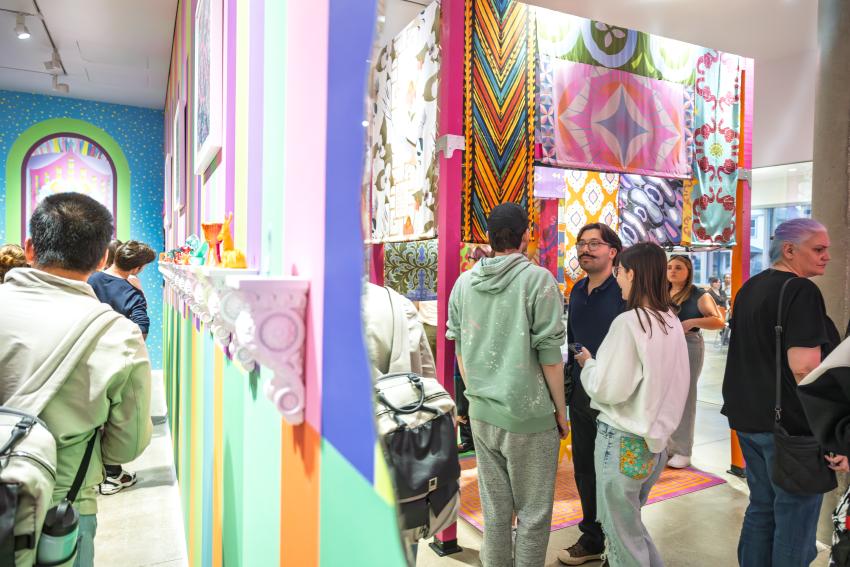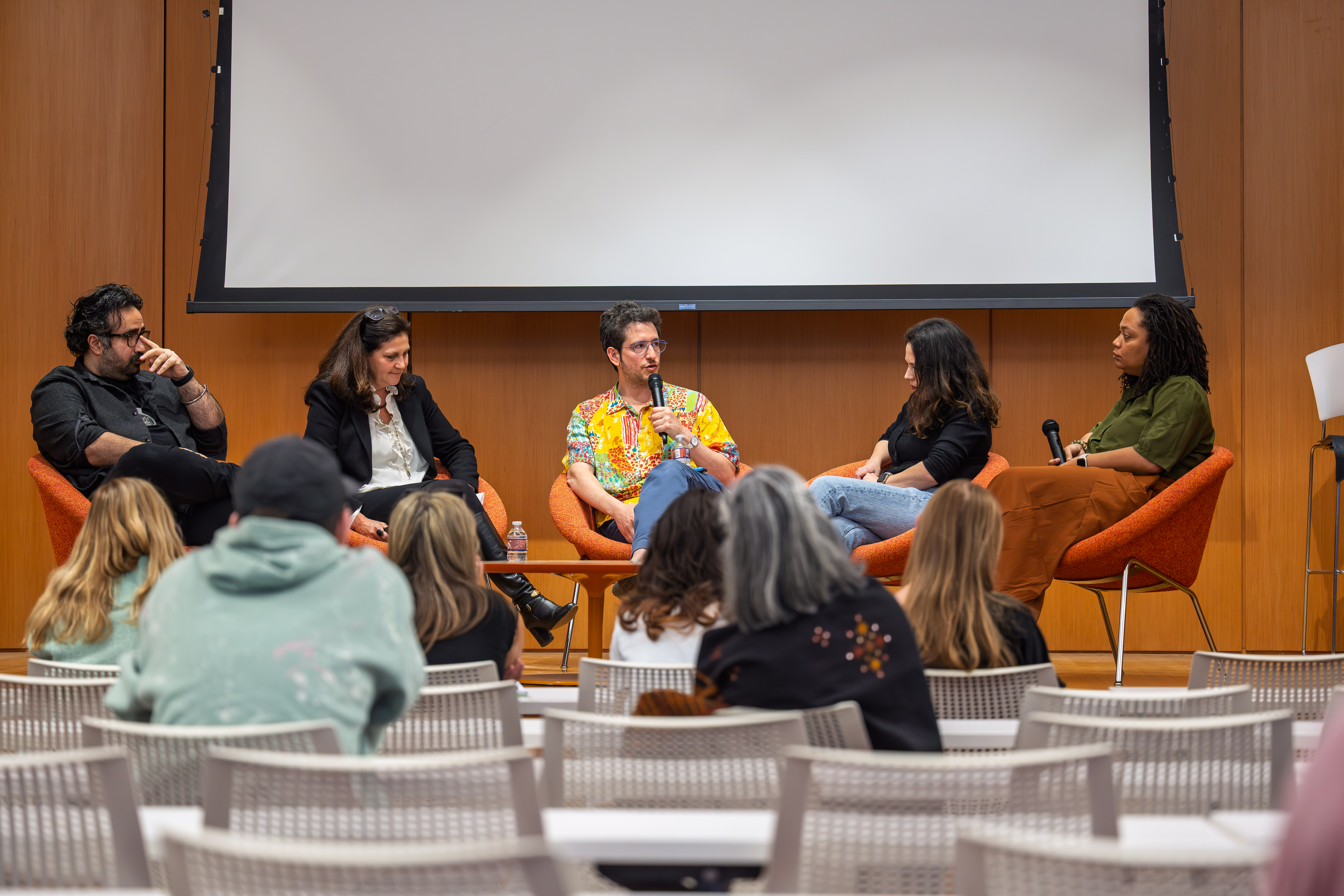
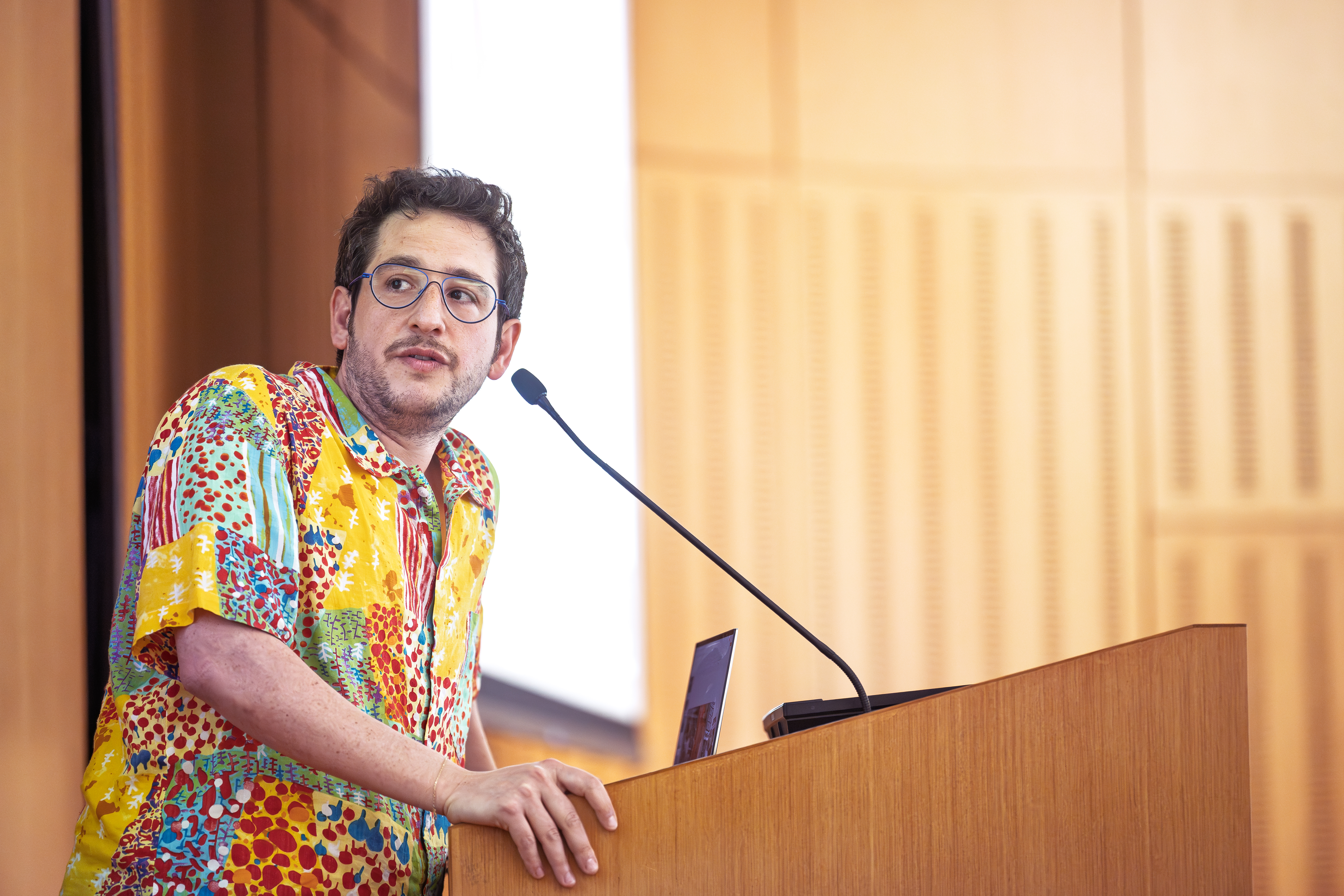
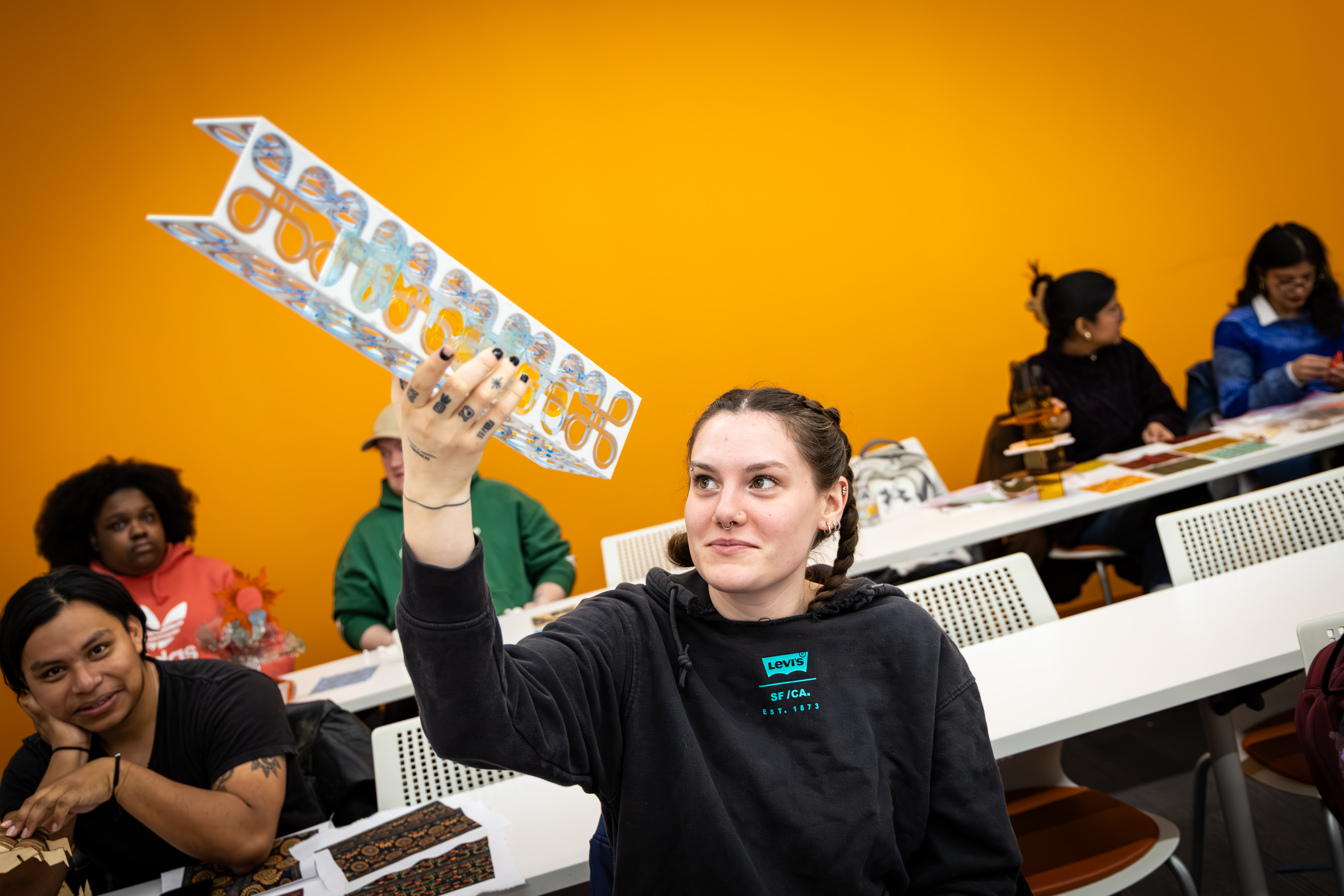
This past semester, the College of Architecture and Environmental Design and College of the Arts at 性福五月天 University hosted Adam Nathaniel Furman as part of the 2025-2026 Thomas Schroth Visiting Artist Series where he worked extensively with fashion and architecture students to produce a vibrant gateway exhibit that is now on display at the Armstrong Gallery in the John Elliot College of Architecture and Environmental Design. This workshop was guided by faculty members, Sue Hershberger Yoder and Kristen Mimms Scavnicky, who provided a direct link between the fashion and architecture programs.
The workshop鈥檚 primary focus was Adam鈥檚 concept of "Productive Exuberance," a term he uses to describe a design philosophy that rejects minimalism in favor of a more joyful and ornamented design aesthetic. For Adam, this exuberance is not merely decorative; it is deeply rooted in his personal research into architectural history and the cities he has "known and loved personally." He views the built environment as a living narrative, stating:
"I like the way that as humans we create ecosystems that we live within ourselves, and that鈥檚 kind of what architecture is for me... I think the very significant majority of my influence comes from that stuff."
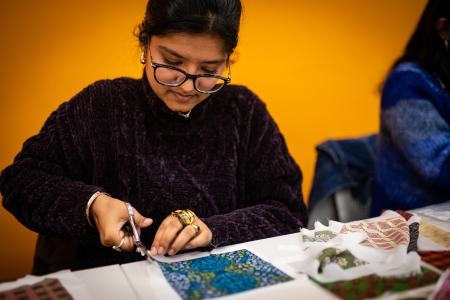
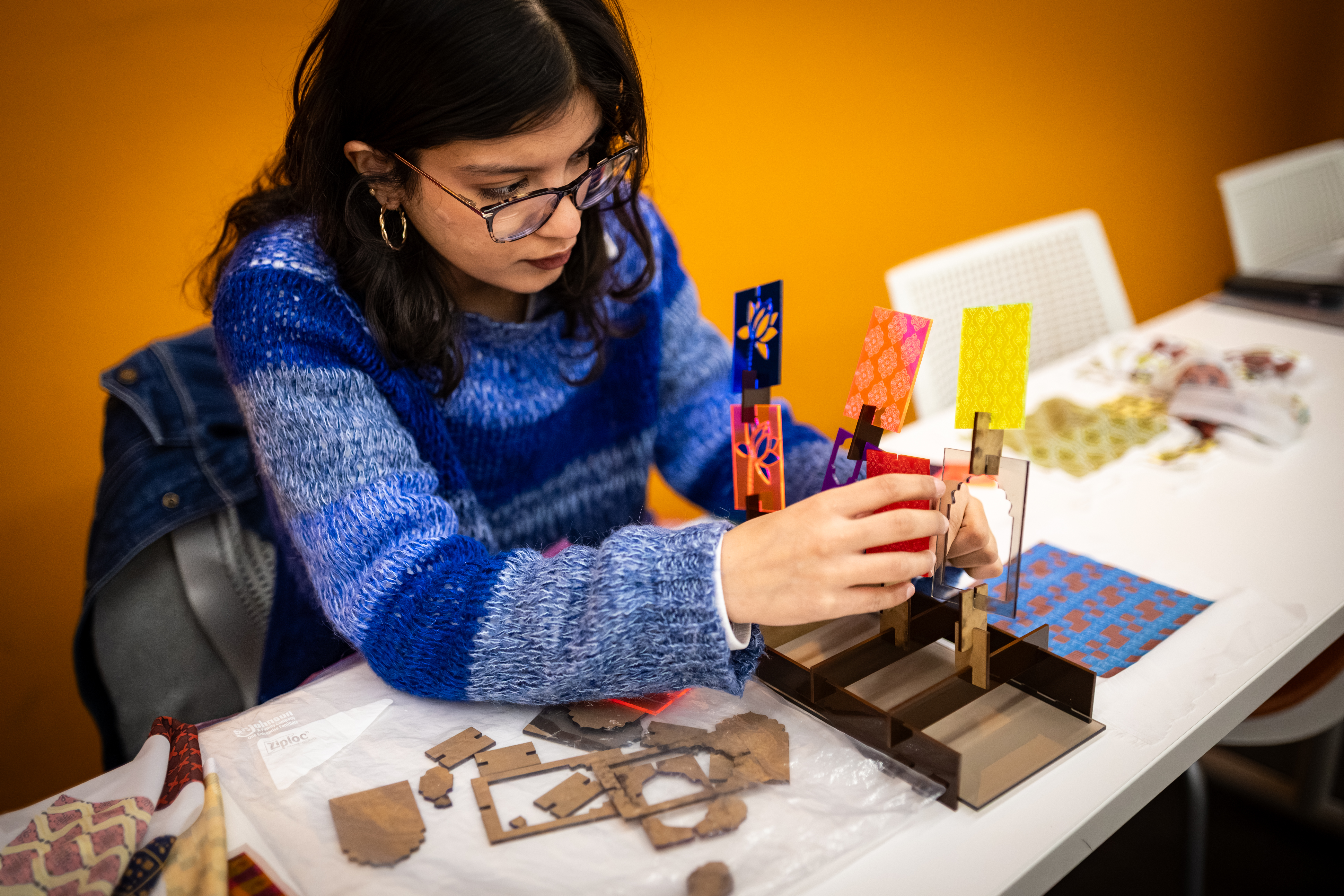
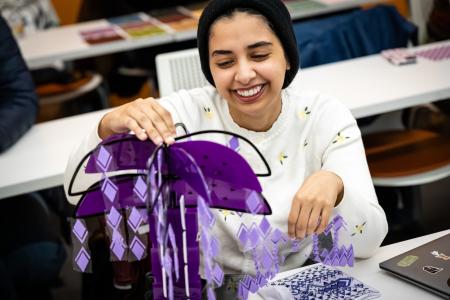
For those of us who participated in the workshop, the projects allowed us to focus more intimately on our personal experiences and challenged us to think outside of our taught programs. Architecture students were pushed to explore the fluid world of creating textile print designs for fabric, while fashion students challenged their typical materiality by working rigidly with acrylic plastics. This created a unique classroom discourse where each student was able to provide valuable insights on their own experiences.
The culmination of this intensive collaboration was a gateway that invited spectators into a world of saturated color and complex geometry. It stood as a physical manifestation of the semester鈥檚 research into identity, space, and cultural storytelling, successfully translating Furman鈥檚 international design influence into a local, student-led achievement. While the installation provided a dramatic threshold for the runway, the broader implications of the workshop continue to resonate within the college. The experience emphasized that the future of the design profession lies in this kind of interdisciplinarity, where the definitions of "architect" or "fashion designer" are traded for a more holistic role as a creator of environments and experiences.